Author: dennis.brouwer

Embrasing Industry 5-0

Embracing Industry 5-0 : The Smart Factory Revolution in Europe

As Europe charts its course toward Industry 5.0, a new manufacturing paradigm emerges—one that blends advanced automation with human creativity, sustainability, and resilience. At the heart of this vision lies the Smart Factory, an ecosystem where interconnected assets, empowered workers, real-time data and intelligent quality controls converge to deliver unprecedented performance. In this blog, we delve into four pillars of the Smart Factory- Smart AssetsSmart WorkerDigital Data Capture and Smart Quality and explore how AI-driven inspection weaves them together into a seamless, future-proof manufacturing operation.

1. Smart Assets: Machines That Think Ahead

1.1 Machine Monitoring & Overall Equipment Effectiveness (OEE)

Rather than relying on periodic manual checks, modern sensors continuously measure uptime, throughput and defect rates on every asset. Dashboards display OEE in real time, enabling supervisors to spot even marginal slowdowns such as a conveyor running 4% below nominal speed and correct them before they cascade into major bottlenecks.

1.2 Predictive Maintenance

Fixed-schedule servicing is rapidly giving way to predictive maintenance powered by AI. By analyzing vibration signatures, temperature trends and lubricant conditions, advanced models forecast failures weeks in advance. The result? Up to 30% fewer unplanned stoppages, substantial savings on spare parts, and longer equipment lifespans.

1.3 Energy Monitoring

With energy costs and carbon targets climbing, granular sub-metering has become standard. Coupled with machine-learning optimizers, Smart Factories shift energy-intensive tasks to times of low grid demand or high renewable output trimming bills by 10–15 % while reducing environmental impact.

2. Smart Worker: Empowering People in the Loop

2.1 Audits & Compliance

Digital checklists on tablets and wearables guide operators through every safety and quality procedure, from lock-out/tag-out sequences to chemical handling protocols. Automatic logs assure auditors that each step adheres to ISO 45001 and ISO 9001, fostering a culture of accountability.

2.2 Safety-PPE Monitoring

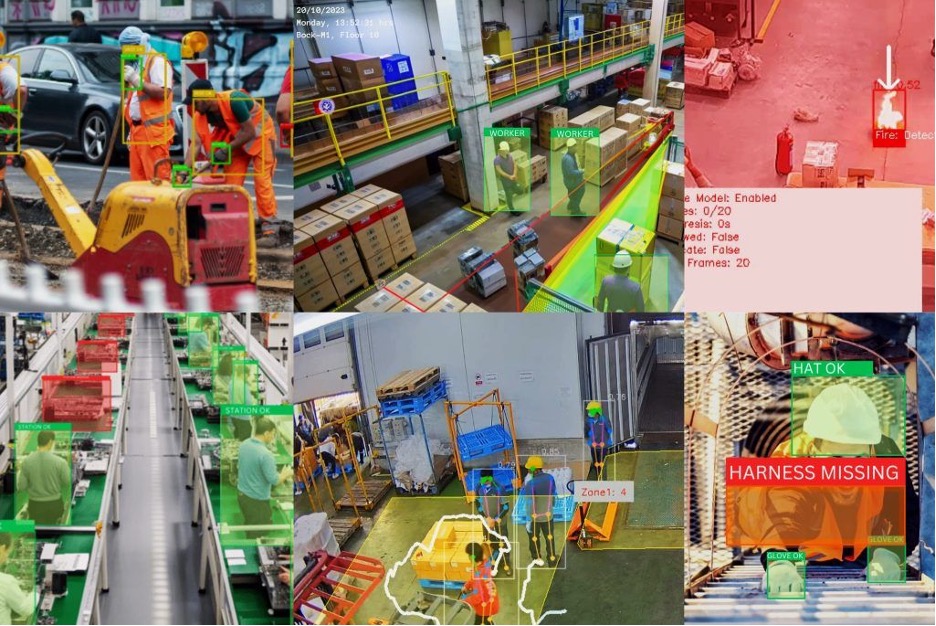
Computer vision and wearable sensors ensure that personnel don the correct protective equipment—helmets, goggles, gloves and maintain safe distances from hazards. Real-time alerts avert potential incidents and reinforce best practices.

2.3 Workforce Management & Man-Machine Linkage

AI-driven scheduling tools match operator skills to tasks in real time, balancing workloads and minimizing idle time. Meanwhile, collaborative robots (“cobots”) dynamically adjust speed and force based on human proximity, forging a truly symbiotic partnership on the shop floor.

2.4 Attendance & Payroll Automation

RFID badges, biometric scanners and integrated software automatically record shift hours, overtime and absenteeism. This direct feed into payroll systems slashes administrative overhead and guarantees accurate, timely compensation.

3. Digital Data Capture: Orchestrating the Invisible

3.1 Planning & Scheduling

Gone are the days of static Gantt charts. AI-powered planners ingest live data from order backlogs and material availability to labor rosters and machine status to generate optimized schedules that shorten lead times by up to 20% and boost on-time delivery.

3.2 Digital Twin

digital twin is a dynamic, virtual replica of your production line. Engineers use it to simulate “what-if” scenarios, adding shifts, swapping materials or testing new equipment without risking real-world disruptions. The outcome is faster innovation with reduced downtime.

4. Smart Quality: Precision Meets Speed

4.1 AI-Driven Defect Detection

High-resolution cameras and deep-learning algorithms inspect each part in milliseconds, detecting minute scratches, dents or misalignments with 99%+ accuracy. By automating visual inspection, human inspectors are freed to focus on root-cause analysis and process improvement.

4.2 Parts Presence Verification

Before a product advances, computer-vision systems confirm that every component—bolts, sensors, gaskets—is present and correctly oriented. Immediate alerts prevent missing-parts errors that would otherwise lead to costly rework or field failures.

4.3 Dimensional Measurement

Laser-scanning devices capture dense point clouds of each component. AI classifiers then compare this data to CAD tolerances, flagging any deviations on the spot. This replaces manual calipers and micrometers, accelerating throughput on mixed-model lines.

5. Weaving It All Together: The AI-Powered Closed Loop

The true power of the Smart Factory emerges when these pillars interlock:

  1. Feedback to Assets: Quality-inspection data streams back to the Smart Assets layer triggering maintenance alerts when defect rates climb or tuning machine parameters to restore precision.
  2. Adaptive Scheduling: Digital Data Capture platforms ingest quality insights and dynamically re-optimize production plans, adding buffer time or rerouting workloads around critical processes.
  3. Operator Guidance: Smart Worker interfaces deliver real-time prompts “slow feed rate by 10 %” or “inspect bolt torque here” empowering technicians to intervene before small issues escalate.
  4. Traceability & Compliance: Every sensor reading, inspection image and operator action is logged for full audit trails, driving continuous improvement and regulatory confidence.

Conclusion: Why Europe Must Act Now

Europe’s twin ambitions of technological leadership and sustainable growth find their natural nexus in the Smart Factory. By marrying AI-driven quality controls with predictive upkeep, energy intelligence and human-centered design, manufacturers can achieve:

  • Higher Productivity: 15–25 % gains in throughput
  • Lower Costs: 20–30 % reductions in quality-related scrap and rework
  • Enhanced Safety: Near-zero serious incidents through proactive PPE and proximity monitoring
  • Sustainability: Reduced energy use and carbon emissions, aligned with the EU Green Deal

In the era of Industry 5.0, the Smart Factory is more than a buzzword it’s a strategic imperative. European manufacturers that embrace these technologies today will not only outperform competitors but also build a more resilient, human-centric industrial ecosystem for tomorrow. The future of manufacturing is smart, sustainable and strikingly synergistic and it’s already within our reach.

D&D AI Solution Foruminvest

D&D AI Solutions Partners with Foruminvest

D&D AI Solutions is pleased to announce that Foruminvest has selected us to conduct a comprehensive AI Due Diligence process. This collaboration marks a significant milestone for both organizations, as we join forces to harness the transformative power of artificial intelligence in real estate development. Foruminvest’s decision to partner with D&D AI Solutions is a testament to our expertise and innovative approach in applying AI to complex, mission-critical business processes.

For decades, Foruminvest has been a driving force behind the development of shopping centers that define modern retail experiences. Their impressive track record includes delivering high-quality projects across the Netherlands, characterized by meticulous planning, customer-centric design, and operational excellence. Today, as Foruminvest expands its portfolio to include the construction of international hotels for renowned hospitality brands, they face new challenges and opportunities that span regulatory compliance, document management, and cross-border coordination.

Recognizing these evolving needs, Foruminvest has turned to D&D AI Solutions to perform AI Due Diligence: a rigorous assessment designed to identify, evaluate, and mitigate risks associated with AI integration, while uncovering opportunities for efficiency and growth. Our mission is to analyze critical processes—such as permit application workflows, regulatory submissions, and large-scale document management—and to determine how AI can be safely and effectively deployed to streamline operations and enhance decision-making quality.

Permit applications for construction projects often involve dozens of stakeholders, an intricate web of regulations, and voluminous technical documentation. Manual review can be time-consuming, error-prone, and costly. Through our due diligence process, D&D AI Solutions will map the end-to-end permit workflow, identify key pain points, and evaluate AI techniques—like natural language processing and intelligent document classification—that can accelerate reviews, flag inconsistencies, and reduce compliance risk.

Document management constitutes another cornerstone of real estate development, underpinning contractual negotiations, vendor agreements, and project specifications. For a company like Foruminvest, which simultaneously manages domestic and international projects, ensuring that documents are up to date, version-controlled, and accessible is paramount. Our AI Due Diligence will assess existing systems, recommend best-in-class AI-powered document-insight tools, and chart a clear roadmap for integration—enabling automated metadata tagging, semantic search, and real-time collaboration.

Beyond operational efficiency, D&D AI Solutions is committed to ensuring that AI deployments align with Foruminvest’s corporate governance, ethical standards, and regulatory obligations. Our Due Diligence framework covers data privacy, model transparency, and algorithmic fairness. We will work closely with Foruminvest’s legal, compliance, and IT teams to establish robust governance structures, data-handling protocols, and audit trails, thereby safeguarding stakeholder trust and minimizing legal exposure.

The partnership with Foruminvest also underscores a broader industry trend: the realization that AI is no longer a concept of the future—it is a strategic imperative today. Real estate development is becoming increasingly data-driven, and organizations that leverage AI to optimize processes, predict market trends, and reduce risk will gain a competitive advantage. With D&D AI Solutions’ deep domain expertise in both AI technology and real estate operations, Foruminvest is positioned to lead this transformation.

Over the coming weeks, our multidisciplinary team of data scientists, AI engineers, and industry consultants will engage with Foruminvest’s project leads and subject-matter experts. We will conduct workshops, perform technical audits, and deliver a detailed report outlining use-case prioritization, technology recommendations, and a phased implementation plan. This deliverable will serve as a strategic guide, enabling Foruminvest to move forward confidently with AI initiatives that deliver measurable value.

For D&D AI Solutions, being selected by a market leader like Foruminvest validates our approach to AI Due Diligence—an approach that balances cutting-edge technology with pragmatic business insights. We take pride in helping organizations navigate the complexities of AI adoption, ensuring that every recommendation is grounded in real-world operational considerations and aligned with long-term strategic goals.

In reflecting on this milestone, our CEO commented: “Partnering with Foruminvest is an exciting opportunity to demonstrate how AI can revolutionize real estate development processes—from the first permit application to the final project close-out. We look forward to delivering actionable insights that will empower Foruminvest to achieve faster approvals, streamlined workflows, and enhanced compliance, all while upholding the highest standards of governance and ethics.”

As we embark on this journey together, D&D AI Solutions remains dedicated to delivering exceptional service and innovation. We are grateful to Foruminvest for their trust and confidence, and we are eager to showcase the tangible benefits of AI in one of Europe’s most dynamic real estate markets.

AI Vision Inspection

AI Vision Inspection in the Benelux: Why Most Pilots Fail — and How to Scale Successfully

Across the Benelux, manufacturers are actively investing in AI vision inspection.From food processing to automotive, from packaging to maritime manufacturing, quality control is under increasing pressure.

Manual inspection is expensive, inconsistent and increasingly difficult to staff.Traditional rule-based vision systems struggle with variability.

AI vision inspection promises a solution.

Yet despite strong interest, many vision AI projects never move beyond pilot phase.

Why?

Because scaling AI vision in real factories is far more complex than most vendors admit.

Why AI Vision Inspection Looks Easy — Until It Isn’t

AI vision demos are impressive.Defects are detected in real time. Dashboards show confidence scores. Accuracy appears close to 100%.

But pilots are usually run under:

  • controlled lighting
  • limited product variation
  • short timeframes
  • clean datasets

Once the system is deployed on a live production line, reality sets in.

Manufacturers in the Benelux report issues such as:

  • accuracy dropping during night shifts
  • false positives during product changeovers
  • unstable performance due to reflections, dust or vibrations
  • difficulty integrating with PLCs and reject mechanisms

The result:A promising pilot that never scales.

The Benelux Manufacturing Reality

Factories in the Benelux are among the most advanced in Europe, but they also face unique challenges:

  • high mix / low volume production
  • frequent product changes
  • strict food and safety regulations
  • limited tolerance for downtime
  • complex multi-vendor machine landscapes

AI vision inspection must perform consistently across all these conditions — not just during demonstrations.

This is where most solutions fail.

The Three Critical Failure Points of Vision AI Projects

Through industrial AI due diligence and factory deployments, three recurring failure points emerge.

1. Data and Model Fragility

Many vision AI systems are trained on:

  • limited datasets
  • ideal lighting conditions
  • perfectly aligned products

In real factories:

  • lighting changes
  • materials reflect differently
  • products shift slightly on conveyors

If the model is not robust, accuracy collapses.

Successful manufacturers ensure:

  • continuous model retraining
  • diverse datasets
  • validation under worst-case scenarios

(Alt-tag example: AI vision inspection system Jidoka)

2. Poor Integration With Production Lines

Vision AI does not deliver value on its own.

It must integrate seamlessly with:

  • PLCs controlling reject mechanisms
  • robots handling products
  • MES systems logging quality data
  • line controllers managing speed and flow

In many pilots, integration is treated as an afterthought.

When the system moves to production:

  • latency issues appear
  • reject timing is off
  • data is not properly logged

Scalable vision inspection requires industrial-grade integration from day one.

3. Ignoring the Human Factor

Operators and quality engineers interact with vision systems daily.

If a system:

  • generates too many false alerts
  • lacks explainability
  • is difficult to maintain

It will be bypassed or disabled.

Successful deployments focus on:

  • clear feedback to operators
  • explainable defect classification
  • easy recalibration
  • ownership on the shop floor

AI vision must support people — not fight them.

From Pilot to Production: What Successful Benelux Manufacturers Do Differently

Manufacturers who scale AI vision inspection follow a structured approach.

Start With Industrial AI Due Diligence

Before deploying vision AI at scale, leading manufacturers validate:

  • model robustness under real conditions
  • integration with existing machinery
  • long-term vendor support
  • cybersecurity and data governance

This prevents costly rework and failed rollouts.

Design for Variability, Not Perfection

Instead of optimizing for one perfect scenario, successful projects:

  • test multiple product variants
  • simulate worst-case lighting
  • validate night shifts and peak loads

This ensures consistent performance across all conditions.

Integrate Vision AI Into the Smart Factory Stack

Vision AI performs best when part of a broader ecosystem:

  • robotics for handling and sorting
  • digital twins for process optimization
  • dashboards for quality trends
  • predictive maintenance for cameras and hardware

This holistic approach turns inspection data into operational intelligence.

Measure What Matters to the Business

Scaling vision AI is not about accuracy percentages alone.

CEOs focus on:

  • reduction in defects and rework
  • fewer recalls
  • improved throughput
  • lower labour dependency
  • consistent quality across sites

When these metrics improve, vision AI becomes a strategic asset — not a technical experiment.

The Role of Smart Factory Integrators

Another key success factor is who leads the implementation.

Vision AI vendors typically focus on their own technology.Smart factory integrators focus on:

  • selecting the right vision solution
  • validating it independently
  • integrating it with robots, PLCs and IT systems
  • ensuring adoption on the shop floor

For Benelux manufacturers, this orchestration role significantly reduces risk.

Vision AI as a Competitive Advantage in the Benelux

The Benelux region is highly competitive.Manufacturers operate under tight margins and high quality expectations.

AI vision inspection, when scaled correctly, delivers:

  • consistent quality
  • reduced waste
  • faster production
  • improved compliance

Those who succeed move faster, operate leaner, and protect their brand reputation.

Conclusion: Scaling Vision AI Is a Leadership Challenge

AI vision inspection technology is mature enough.What determines success is execution.

Manufacturers that:

  • validate before scaling
  • integrate deeply
  • involve operators
  • measure real business impact

Turn vision AI into a long-term advantage.

Those who don’t remain stuck in pilot mode.

For CEOs in the Benelux, the lesson is clear:

AI vision inspection is not a technology project.It is a leadership and execution challenge.

AI for manufacturing

AI for Manufacturing in Europe: Why Most AI Projects Fail — and How to Get It Right

Across Europe, manufacturing CEOs are under pressure.Margins are tightening. Skilled labour is harder to find. Energy costs remain unpredictable. At the same time, everyone is talking about artificial intelligence as the solution.

Yet behind closed doors, many executives share the same concern:

“We have tested AI. It sounded promising. But it didn’t deliver.”

This is not because AI does not work.It is because most AI initiatives in manufacturing are poorly selected, poorly validated, and poorly integrated.

In this article, we explain why AI projects fail so often in European factories — and what CEOs must do differently to achieve real impact.

The AI Hype Problem in European Manufacturing

The European AI market is flooded with vendors claiming:

  • higher efficiency
  • predictive insights
  • autonomous decision-making
  • instant ROI

In reality, over 70% of AI projects in manufacturing never move beyond pilot phase.

Why?

Because many AI solutions are:

  • built for demos, not production floors
  • trained on unrealistic datasets
  • unable to integrate with existing PLC, MES or SCADA systems
  • sensitive to real-world factory conditions such as dust, vibration and variable lighting

For a CEO, the result is simple and painful:

  • wasted time
  • wasted capital
  • internal scepticism towards future AI initiatives

Why Manufacturing AI Is Fundamentally Different

AI for manufacturing is not the same as AI for marketing, finance or HR.

Factories operate in:

  • real-time environments
  • safety-critical conditions
  • highly integrated OT/IT landscapes

A vision AI model that performs well in a lab may collapse on a production line running 24/7.A predictive maintenance algorithm may look impressive in dashboards but fail when sensor data is incomplete or noisy.

That is why industrial AI requires industrial validation.

European manufacturers need solutions that are:

  • deterministic where needed
  • robust under real conditions
  • scalable across multiple sites
  • compliant with European regulations

The Role of AI Vision, Robotics and Digital Twins

When implemented correctly, AI delivers measurable results — particularly in three domains:

AI Vision Inspection

Vision AI replaces manual quality checks and outdated rule-based systems.It detects defects invisible to the human eye and operates continuously.

Typical results:

  • 30–40% defect reduction
  • higher consistency
  • fewer recalls

Robotics and Cobots

Cobots address labour shortages while increasing precision and safety.Unlike traditional automation, modern cobots adapt to dynamic environments.

Use cases include:

  • machine tending
  • palletizing
  • welding assistance

Digital Twins for Manufacturing

Digital twins simulate production flows before physical changes are made.They reduce risk, optimise layouts and improve planning accuracy.

Why CEOs Need Industrial AI Due Diligence

The biggest mistake companies make is choosing technology before validating suitability.

Industrial AI Due Diligence changes this.

Instead of asking “What does this vendor promise?”, the question becomes:

  • Does this solution survive factory conditions?
  • Can it integrate with our machines?
  • What is the real ROI, not the demo ROI?
  • What risks do we carry if the vendor disappears?

A proper due diligence framework evaluates:

  • technical maturity
  • industrial readiness
  • integration depth
  • operational impact
  • compliance with EU AI Act and cybersecurity standards

For CEOs, this approach delivers one critical benefit:decision confidence.

Smart Factory Integrators vs. AI Vendors

Another key distinction CEOs must understand is the difference between:

  • AI vendors
  • smart factory integrators

AI vendors sell tools.Smart factory integrators deliver outcomes.

An integrator:

  • selects best-in-class AI, robotics and IoT
  • validates technology before deployment
  • integrates across OT and IT
  • ensures adoption on the shop floor

For European manufacturers, this orchestration role is essential.Factories are ecosystems, not software stacks.

This is why more CEOs are shifting from vendor-led pilots to integrator-led smart factory programs.

What Successful European Manufacturers Do Differently

Manufacturers that succeed with AI follow a consistent pattern:

  1. They start with business impact, not technology.
  2. They validate AI solutions before scaling.
  3. They integrate AI into existing processes instead of replacing them overnight.
  4. They measure ROI continuously.
  5. They partner with specialists who understand manufacturing realities.

AI becomes a strategic capability — not an experiment.

Conclusion: AI That Works, Not AI That Looks Good

AI for manufacturing in Europe is no longer optional.But choosing the wrong AI is worse than choosing none.

The winners of the next decade will be manufacturers who:

  • cut through AI hype
  • demand industrial proof
  • invest in validated solutions
  • work with smart factory integrators

For CEOs, the message is clear:

AI is not about technology.

It is about execution, validation and trust.

AI Robotics Integrator

AI Robotics Integrator Netherlands: Why Manufacturers Need Orchestration, Not Vendors

Across the Netherlands, manufacturers are investing heavily in robotics Cobots, industrial robots, AI vision systems and automation software are widely available, competitively priced and technically mature.

Yet despite this abundance of technology, many factories struggle to scale automation beyond isolated projects.

The reason is simple:

Most manufacturers do not suffer from a lack of technology — they suffer from a lack of orchestration.

This is where the role of the AI robotics integrator becomes critical.

The Vendor Trap: Why Buying Robots Is Not the Same as Automating a Factory

Many automation journeys start with a single vendor:

  • a cobot supplier
  • a vision AI provider
  • a machine builder

The first project often succeeds.The robot performs its task.The demo works.

But when manufacturers try to expand:

  • integration complexity increases
  • systems don’t communicate
  • architectures diverge
  • maintenance becomes fragmented

Each new robot becomes a custom project.

Over time, factories end up with:

  • multiple disconnected solutions
  • inconsistent standards
  • rising integration costs
  • growing operational risk

This is known as the vendor trap.

Why Robotics Has Become an Orchestration Challenge

Modern factories are no longer linear production lines.

They are complex ecosystems that combine:

  • robotics
  • AI vision
  • PLCs
  • MES and ERP systems
  • IoT sensors
  • edge computing
  • cybersecurity layers

No single vendor owns this entire stack.

As a result, success depends less on individual components and more on how everything works together.

This is the core value of an AI robotics integrator.

What an AI Robotics Integrator Actually Does

An AI robotics integrator is not a reseller and not a system installer in the traditional sense.

Their role is to:

  • design a scalable automation architecture
  • select best-in-class technologies
  • validate solutions before deployment
  • integrate robotics with IT and OT systems
  • standardise across lines and sites
  • ensure long-term operability

In short, integrators deliver outcomes, not hardware.

Why This Matters Specifically in the Netherlands

Dutch manufacturing has several unique characteristics:

  • high automation density
  • complex supply chains
  • strong focus on quality and compliance
  • high labour costs
  • limited tolerance for downtime

Factories are often brownfield environments with:

  • legacy machines
  • mixed PLC brands
  • custom-built lines

In this context, point solutions rarely scale.

Manufacturers need partners who understand:

  • industrial complexity
  • regulatory requirements
  • long-term operational impact

This makes the integrator role especially critical in the Netherlands.

The Difference Between Integrators and Vendors

To understand the value of orchestration, consider the difference in mindset.

Vendors focus on:

  • selling their product
  • optimising their component
  • closing individual deals

Integrators focus on:

  • factory performance
  • cross-system reliability
  • long-term scalability
  • risk reduction

Vendors answer the question:“Does our robot work?”

Integrators answer the question:“Does your factory work better?”

The Role of AI in Modern Robotics Integration

Robotics integration today goes far beyond mechanical automation.

AI enables:

  • adaptive robot behaviour
  • vision-guided manipulation
  • dynamic task allocation
  • predictive maintenance
  • real-time optimisation

But AI also increases complexity.

Without proper orchestration:

  • models degrade
  • integrations break
  • data becomes fragmented

AI robotics integrators ensure that intelligence is:

  • validated
  • explainable
  • maintainable
  • compliant

Industrial AI Due Diligence as the Foundation

One of the most overlooked aspects of robotics integration is technology selection.

Not all AI and robotics solutions are equally mature.

Industrial AI Due Diligence helps manufacturers:

  • evaluate technical robustness
  • test performance under real conditions
  • assess integration readiness
  • understand long-term vendor risk

This prevents investments in solutions that look impressive but cannot scale.

For CEOs, due diligence provides governance and confidence.